



The practical guide to choosing the right car
Many people spend ten minutes picking a rental car by sorting on price and clicking the cheapest option. On most islands that’s fine. In Mallorca, it can mean a week of awkward parking, a sweaty convertible in 34°C, or a spoiler scraped off on a village kerb. This guide helps you pick the right car before you arrive — not figure it out after.
In this guide:
- Why the car choice actually matters in Mallorca
- Car categories explained
- What comparison sites don’t show you
- Mallorca-specific factors
- Recommendations by trip type
- Automatic vs manual
- A note on convertibles
- Where you pick up matters too
- Car size and insurance
- Before you book: checklist
- FAQ
In a city like Barcelona or Madrid, a small car is almost always the right answer. Easy to park, cheap to run, does the job. Mallorca is different — and it’s different in both directions depending on where you’re going and what you’re doing.
The island has everything from wide motorway-style roads on the flatlands to single-track mountain passes in the Serra de Tramuntana with barely enough room for one car and a cliff on the other side. It has modern supermarket car parks with generous spaces and medieval village squares where you’ll genuinely question whether your car fits. It has kerbs that will destroy a front spoiler if you don’t anticipate them, and parking lots where the spaces are sized for a different era.
The car you pick affects your comfort, your parking stress, your fuel bill — and, if you don’t have full insurance, your financial exposure. It’s worth five minutes of thought before you book.
Our take
A bigger car is rarely a problem when you’re driving in Mallorca. The problem is almost always parking. Before you opt up in size, ask yourself: how often will I be parking in tight spots, old town streets, or beachside car parks? That question, more than anything else, should drive your decision.
2. Car categories explained
Rental companies use standardised category codes. The names vary — “economy”, “compact”, “intermediate” — but the codes are consistent. Here’s what each means in practice for Mallorca.
CATEGORY A / MINI
City car
The cheapest option. Fine for one or two people with light luggage and no ambitions beyond beaches near the coast. Tight on space, basic on comfort, limited on power — particularly noticeable on mountain climbs.
Fiat 500, VW Up, Citroën C1, Toyota Aygo
CATEGORY B / ECONOMY
Small hatchback
The most commonly rented category on the island. Works well for couples or two adults travelling light. The sweet spot for solo travellers. Still tight for three adults with luggage.
Seat Ibiza, VW Polo, Toyota Yaris, Fiat Panda
CATEGORY C / Compact
Medium hatchback
The step up that most people don’t regret. Handles three adults comfortably, fits a week’s luggage for a family of four, and is still manageable in most parking situations. Our general recommendation for groups of 3+.
VW Golf, Seat León, Toyota Auris, Ford Focus
CATEGORY D / INTERMEDIATE
Larger hatchback or small estate
More comfort, more boot space, noticeably more car to park. Good for families doing a lot of driving. Worth it if comfort matters and you’re spending time in bigger towns with structured car parks rather than squeezing into old town side streets.
VW Passat, Seat Toledo, Skoda Octavia
SUV / CROSSOVER
SUV
More ground clearance, more road presence. Useful for rural tracks near fincas or remote beaches. Harder to park, higher fuel consumption, and meaningfully more expensive. The extra height is rarely necessary — most roads in Mallorca are paved — but the space and ride comfort are appreciated on longer drives.
Seat Arona, VW T-Roc, Nissan Qashqai, Kia Sportage
7-SEATER / MPV
People carrier
The right tool for large families or groups. A large car in a small space is genuinely stressful, so plan accordingly — stick to hotel car parks and out-of-town supermarkets, and accept that some narrow village streets are not worth attempting.
Seat Alhambra, VW Sharan, Ford S-Max, Citroën Berlingo
Tip
Two-door cars: If you’re three or more people, avoid two-door models. Getting in and out of the back is uncomfortable, especially in tight parking lots where you can’t open the front doors fully. It sounds minor until day four of your trip.
3. What comparison sites don’t show you
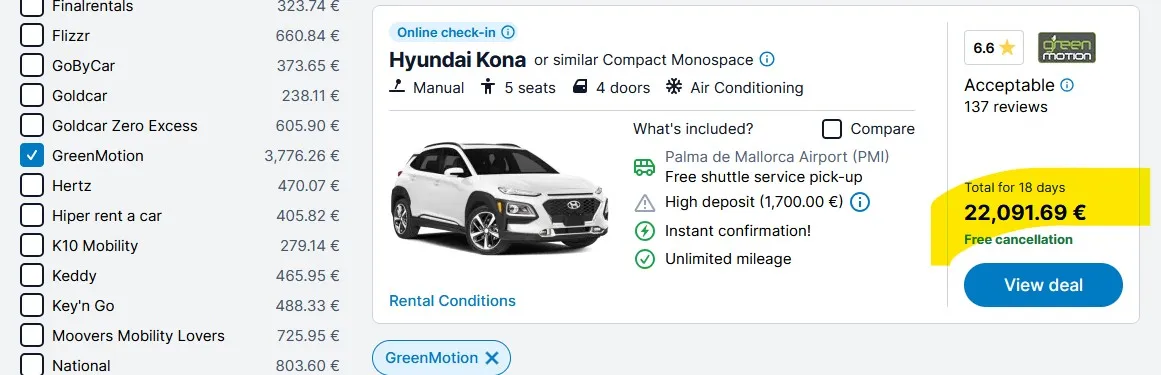
One company in this search result is priced at over €22,000 for 18 days — compared to €238 for the cheapest option. Always scan the full list before assuming the results make sense.
When you sort by “Recommended” or “Lowest price” on a comparison site, you’ll see a result that looks like a simple ranking. It isn’t. The cars at the very top of the lowest-price list are almost always the smallest, most basic cars available. They show a low daily rate because there’s nothing in them — no performance, no comfort features, often no air conditioning upgrade. If you have any luggage or any expectations about what driving should feel like, they may not deliver.
The “Recommended” sort is usually a mix of price and booking volume — not an editorial recommendation. It often surfaces the same category A and B cars, just slightly reordered.
It’s worth scrolling past the first two or three results. A compact or intermediate car is often only €3–8 per day more expensive than the cheapest economy option — a negligible difference over a week, and one that can significantly affect comfort.
It’s also worth scanning the full list with a critical eye — not just for price, but for outliers. A company priced three or four times higher than the rest isn’t necessarily better; it may reflect unusual terms, a high deposit requirement, or simply poor value. If something looks out of place, it usually is.
Practical tip: Use the comparison site to browse, but once you’ve identified the right category, check whether booking directly with the rental company offers a better rate or more flexibility. Our rental guide covers the best companies at Palma airport in detail.
4. Mallorca-specific factors
Parking is where most people regret their car choice
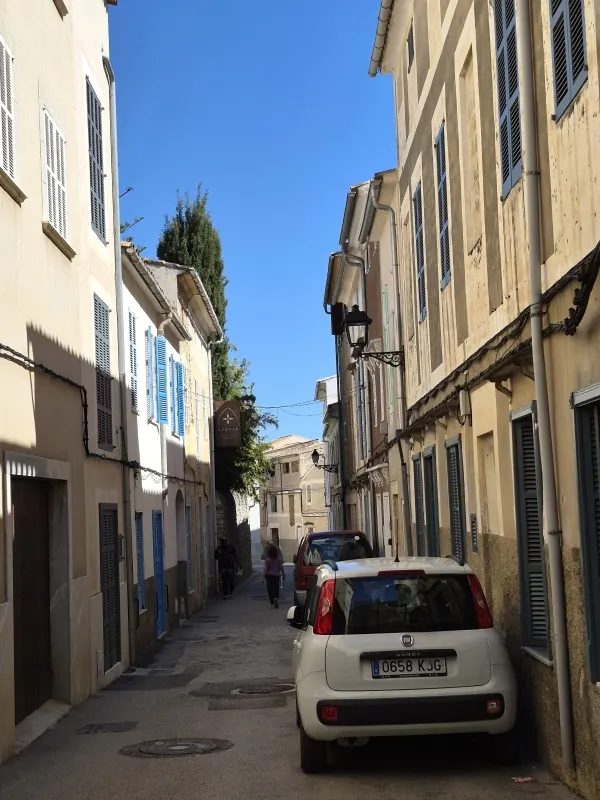
Driving a larger car in Mallorca is rarely the problem. Parking it is. The island has a mix of modern car parks where a mid-size SUV fits fine, and old town streets, beach car parks, and village squares where the spaces are genuinely narrow.
In Palma’s old quarter and in villages like Valldemossa, Deià, and Pollença, parking spaces are sized for the cars that were common when they were built — not for modern SUVs. Manoeuvring in and out of a tight space, with a rental car you’re not used to and drivers on both sides who don’t think twice about flinging their doors open, is how most minor damage happens.
Bumps and scrapes in parking lots are by far the most common damage claims on rental cars in Mallorca. Kerb damage to alloy wheels is also surprisingly common — the island has raised kerbs in many car parks and road edges, and catching one with an unfamiliar car is an easy mistake. Damage to the front spoiler and underside from steep-angled driveways and high kerbs is another regular issue.
If you don’t have full coverage insurance: A larger, more expensive car means a potentially higher damage excess and more expensive repair costs if something goes wrong in a tight spot. This is worth factoring into the car size decision. See our full insurance guide and our guide to zero excess coverage before you decide.
Other drivers
Not every driver in a Mallorcan car park is careful about opening their door. This is not a criticism — it’s a practical reality. If the car next to you in a narrow bay has its driver in a hurry, your door may take a hit regardless of how carefully you parked. This is one more reason why comprehensive coverage makes sense, and one reason some people deliberately choose a smaller car that gives them slightly more buffer space in the bay.
The Tramuntana roads
The mountain roads through the Serra de Tramuntana — the Ma-10 from Andratx to Pollença in particular — are breathtaking and narrow. During high season they can be busy with cyclists, tour buses, and other rental cars, and passing requires patience and good judgement of your car’s width.
This is not a reason to avoid them — they’re some of the best drives on the island. But it is a reason to know your car before you head up. If you’ve just picked up an SUV that’s 40cm wider than your car at home, this is not the place to find that out.
Luggage and real-world boot space
Rental car boot measurements are often listed in optimistic litres. Before you book, think about how much you’re actually bringing. A week-long trip for two adults with checked luggage plus hand luggage can already fill a small hatchback boot. Add beach gear, a pushchair, or anything bought on the island and a compact or intermediate starts looking more practical.
If you’re a family of four with a week’s luggage, a category B car will likely work — but it’ll be snug. A category C or D will give you breathing room. An estate or SUV will give you real comfort.
Our approach: book a fully inclusive rate where possible, or use a third-party excess policy bought in advance. Either way, know what you’re covered for before you reach the desk — not after.
5. Recommendations by trip type
| Trip type | Recommended | Notes |
|---|---|---|
| Solo traveller | Category B — Economy | Easy to park and cheap to run. Step up to C if you’re planning mountain drives or want a bit more comfort on longer stretches. |
| Couple, light luggage | Category B–C | B works well if you’re genuinely packing light. C gives noticeably more comfort and is usually only a few euros per day more — worth it on a week-long trip. |
| Couple, week’s luggage | Category C — Compact | The practical minimum for a full week. Boot space matters more than most people expect, especially once beach gear, shoes, and anything bought on the island gets added in. |
| 3 adults | Category C minimum | Three adults in a category B is doable but uncomfortable on longer drives. Avoid two-door models entirely in this configuration — getting in and out of the back becomes a daily frustration. |
| Family of 4 (2 kids) | Category D or SUV | Gives you real space for luggage, car seats, and beach gear without having to Tetris-pack the boot every morning. The step up from C to D is meaningful with four people over several days. |
| Sightseeing-focused trip | Category C or D | Comfort matters more when you’re covering distance every day. A quieter, more spacious car makes a sightseeing-heavy itinerary noticeably more enjoyable — especially on the longer drives across the island. |
| Group of 5–7 | 7-seater / MPV | The only sensible option for the group in one vehicle. That said, two smaller cars is often cheaper and significantly easier to park — worth running the numbers before you commit to one large vehicle. |
| City-only stay (Palma) | Skip the car or Category A | If you’re based in Palma for the first few days, seriously consider not renting until the day you leave the city. Parking in the centre is genuinely difficult and hotel parking adds up fast. |
6. Automatic vs manual
Choosing the right car is part of getting the most out of Mallorca — and that includes the gearbox. There’s little reason to try something unfamiliar unless you have to. Traffic in Palma, the airport roundabouts, hill starts on narrow mountain roads — these are situations where a gearbox you’re not comfortable with adds stress you don’t need.
If you normally drive an automatic, book an automatic. The price difference has narrowed significantly in recent years, and the cars available in automatic are now across most categories, not just the premium end.
Book early if you need automatic. Automatic cars are still a smaller proportion of most rental fleets. During July and August they can be fully committed weeks in advance. If you need one, secure it when you book — not as an afterthought.
If you’re comfortable with a manual and have no preference, manual gives you the widest choice of cars at all price points. Either works fine on the island’s roads — this is purely a comfort and familiarity question.
7. A note on convertibles
Renting a convertible in Mallorca sounds like exactly the right idea. Open road, warm sun, sea views. It can absolutely be that.
The practical reality of a convertible in peak summer Mallorca is that you’ll have the roof down in the morning, struggle through midday with the air conditioning fighting the open sky, and spend two of your seven days mildly sunburned in a way that ruins the rest of the trip. Go in with realistic expectations and it can be a wonderful experience. It’s just not a practical all-purpose vehicle for a full family holiday.
8. Where you pick up matters too
Almost everyone picks up their rental car at Palma airport (PMI), which is the easiest and most logical option if you’re flying in. But if your trip starts with a few nights in Palma itself, it’s worth thinking about whether you actually need the car from day one.
Palma is a genuinely walkable city. Taxis are plentiful and reasonably priced. Hotel parking in the centre can be expensive — often €15–25 per night — and street parking in the old quarter is genuinely difficult. If your first two or three days are Palma-based, picking the car up on the day you leave the city and head to the rest of the island saves money and a lot of parking stress.
Practical note: If you do this, make sure you book with a company that has an airport location and is flexible on pickup date, or check whether any Palma city-centre pickup options make sense for your hotel location. See our guide to rental companies for details on where each company operates.
9. Car size and insurance
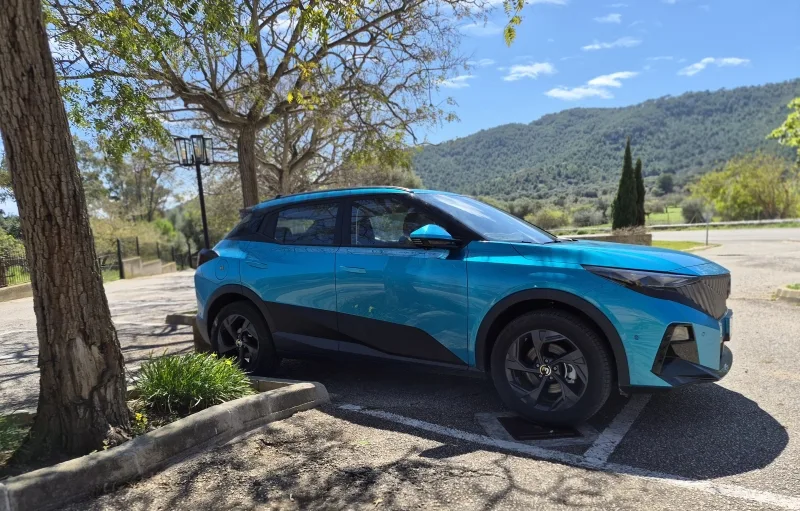
Bigger isn’t always better — and it’s definitely not always cheaper.
There’s a dimension to car choice that rarely gets mentioned: the relationship between the car you rent and your financial exposure if something goes wrong.
A larger, newer, or more premium car carries a higher repair cost if it’s damaged — and a higher potential damage charge. The excess on an SUV or estate can be meaningfully higher than on a compact. If you’re renting without zero-excess coverage, the category of car you choose affects how much you could be asked to pay in a worst-case scenario.
If you’re planning to rent without full insurance, factor this in. If you’re getting comprehensive coverage anyway, it’s less relevant — but still worth knowing. Our full guide to rental car insurance in Mallorca covers how excess works in practice, and our guide to zero excess rentals explains your options for removing the financial risk entirely.
10. Before you book: checklist
- ✓ How many people? If 3 or more, don’t go smaller than category C
- ✓ How much luggage? Be honest — most people underestimate this
- ✓ Spending time in Palma old town or mountain villages? Consider going smaller rather than larger
- ✓ If automatic is what you drive at home, stick with what works — book one early, especially in summer
- ✓ Travelling in July or August? Book earlier and confirm your car category is guaranteed
- ✓ Convertible? Check the season and your luggage situation first
- ✓ Spending the first days in Palma? Pick up the car on the day you leave the city
- ✓ No full insurance? Factor the car category into your damage exposure calculation
- ✓ Scroll past the cheapest results on comparison sites — the step up is usually small
11. Frequently asked questions
What size car is best for a family of four in Mallorca?
A compact (category C) works, but a category D or small SUV is more comfortable for a week’s trip. The difference in boot space — particularly if you have beach gear or are doing laundry rather than packing light — becomes significant over several days. If you’re doing a lot of sightseeing rather than staying in one place, comfort on the drive matters more than on a beach holiday.
Is a small car fine for driving the Tramuntana mountain roads?
Yes — most people drive the Tramuntana in category B and C cars without any issues. A small car can actually feel more appropriate on the narrowest sections. The main consideration is power on steep climbs: a heavily loaded economy car can feel underpowered on long ascents, which is less of an issue in shoulder season and more noticeable in summer heat. If mountain driving is a central part of your trip, a compact or above is more comfortable.
Should I get an automatic or manual rental car in Mallorca?
If you normally drive an automatic, book an automatic. Don’t default to manual because it’s what came up first or because it’s slightly cheaper. Traffic around Palma airport, roundabouts, hill starts in mountain villages — these situations favour the transmission you’re actually comfortable with. Book early if you need automatic, especially in summer.
Can I drive a standard rental car on Mallorca’s unpaved tracks?
Technically, most rental agreements prohibit off-road or unpaved-track driving, and any resulting damage would not be covered by standard CDW. In practice, most “unpaved” access to beaches or rural areas in Mallorca is compacted gravel or hard-packed track, not rough terrain. An SUV is not necessary for most of these. Check your rental agreement — and if you’re planning to access genuinely remote locations, ensure your coverage accounts for it or be prepared to absorb the risk.
Is parking really a problem in Mallorca?
It depends where you are. Palma city centre and the old town can be genuinely difficult — limited spaces, narrow streets, and finding a spot during office hours is no guarantee even outside high season. Beach car parks on popular days fill up early. Village car parks in places like Deià or Sóller are small. On the other hand, most hotels outside the city have free parking, out-of-town supermarkets are easy, and most of the island’s roadside parking is perfectly fine. Plan ahead for the problem spots, and it’s manageable.
What’s the cheapest car category worth renting in Mallorca?
For a solo traveller or a couple with light luggage and modest expectations, a category B economy car (Yaris, Polo, Ibiza) is perfectly adequate. A Fiat 500 or similar category A is fine if you’re staying mostly in coastal areas and don’t need boot space. For anything more than that — more people, more luggage, more driving — the step up to category C compact is usually worth the small extra cost. The difference between the cheapest car and a compact is often less than €5 per day.
Do I need an SUV in Mallorca?
Rarely, unless you specifically want the space, the ride height, or the comfort for a long family trip. Most of Mallorca’s roads are fully paved, including the mountain routes. The extra ground clearance of an SUV is not needed for normal driving. What SUVs do offer is more interior space, better visibility, and a more comfortable ride on long motorway stretches — which you may or may not value enough to justify the higher cost and harder parking.
Ready to compare prices?
We’ve reviewed companies at Palma airport – Read the company reviews